Operta
Laying the foundation for an AI-powered property management experience
Designed the end-to-end UX and UI for Operta, an AI-driven property management platform built to replace disconnected, passive tools with a single intelligent workspace. The brief: transform a fragmented landlord experience into a proactive, agentic product that surfaces insights, automates tasks, and guides users through complex workflows with minimal friction.
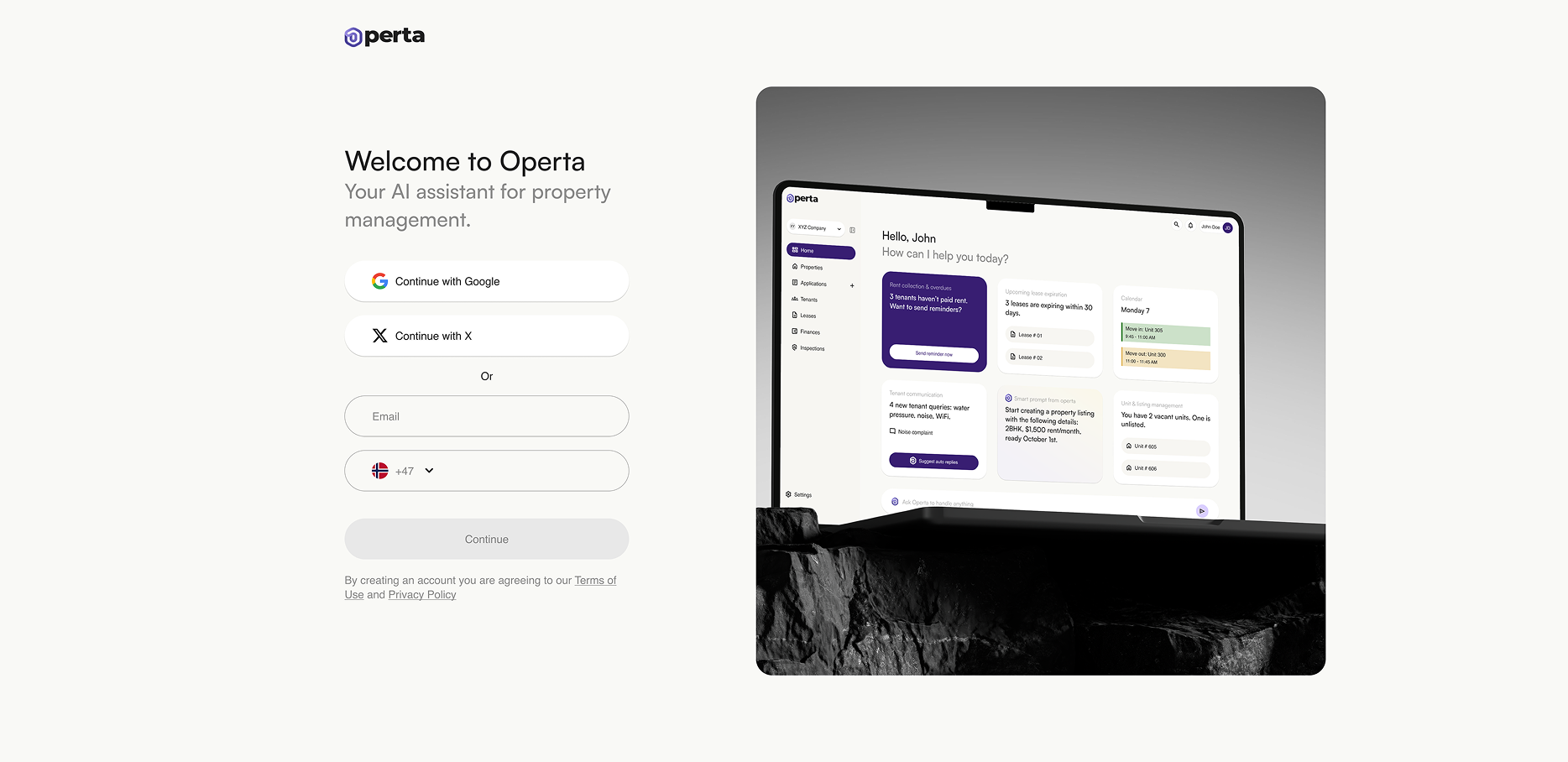
The challenge
Fragmented workflows slowing everything down. Property managers juggled disconnected tools for listings, tenants, payments, and contracts, creating delays, errors, and constant context switching.
No predictive intelligence. Without proactive insights, landlords were forced to manually track rent payments, lease renewals, and maintenance issues, reacting to problems rather than preventing them.
Onboarding drop-off before users went live. Slow, complex setup meant many users abandoned the platform before experiencing its core value, a critical retention problem for an early-stage product.
No single source of truth. Landlords lacked a unified, real-time view of their full portfolio, making it impossible to act confidently without cross-referencing multiple sources.
Reactive platform, passive users. Existing property tools required users to initiate every action. The opportunity was to flip this, building a product that anticipates needs and surfaces the right action at the right moment.
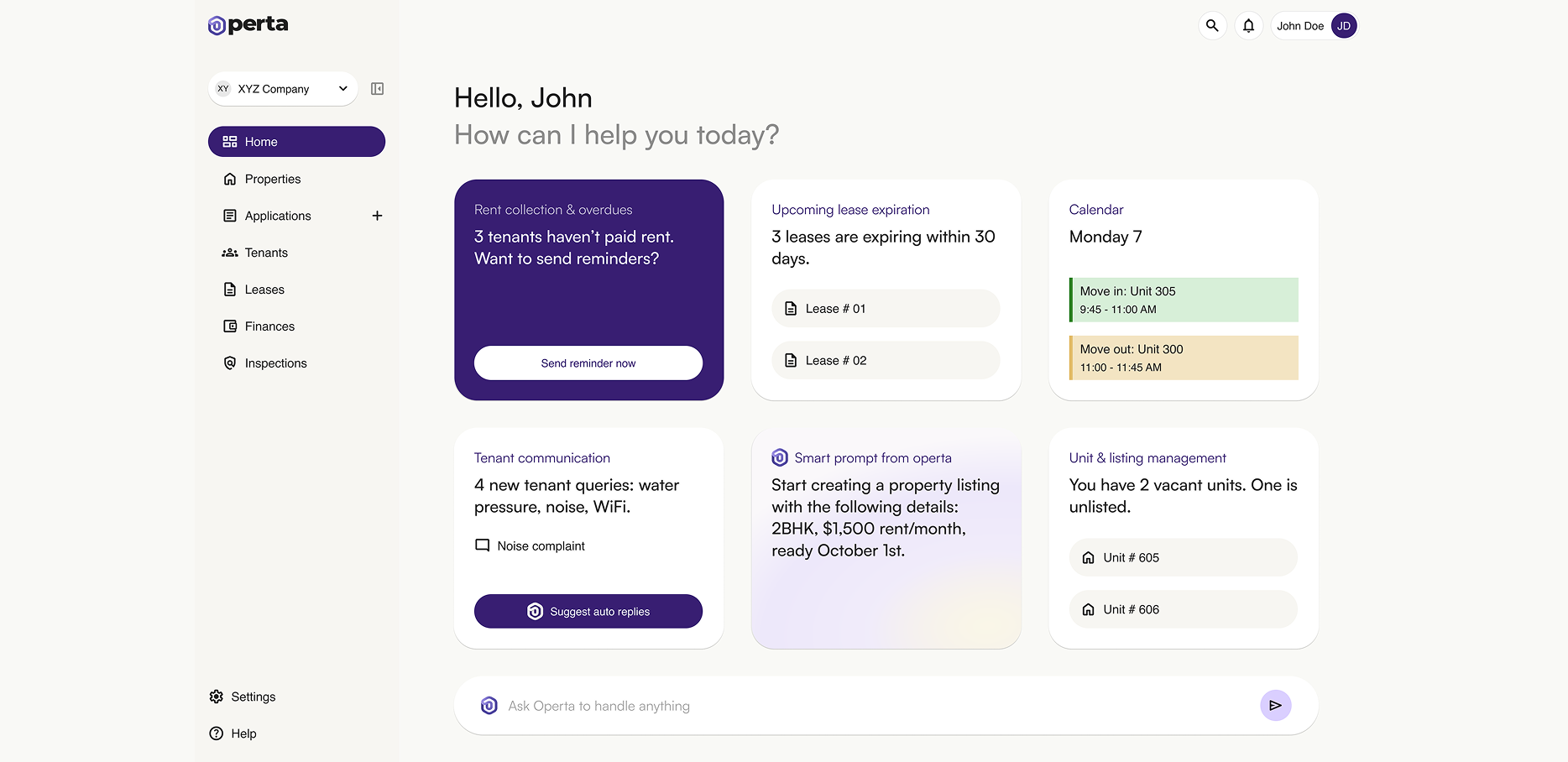
Roles and responsibilities
Leading the design thinking behind Operta's AI core, from product architecture to intelligent UI.
- 01, UX Strategy & Product Architecture Mapped end-to-end user journeys across all core modules, properties, tenants, leases, billing, and inspections, and aligned every flow to Operta's core business goals and AI-first vision.
- 02, Agentic AI Experience Design Integrated proactive AI prompts, smart task suggestions, and conversational UI throughout the platform, transforming Operta from a passive management tool into an intelligent co-pilot for modern landlords.
- 03, UI Design Created high-fidelity dashboards, onboarding flows, listing tiles, application overviews, and payout modules, all optimised for usability, speed, and the demands of a data-heavy SaaS product.
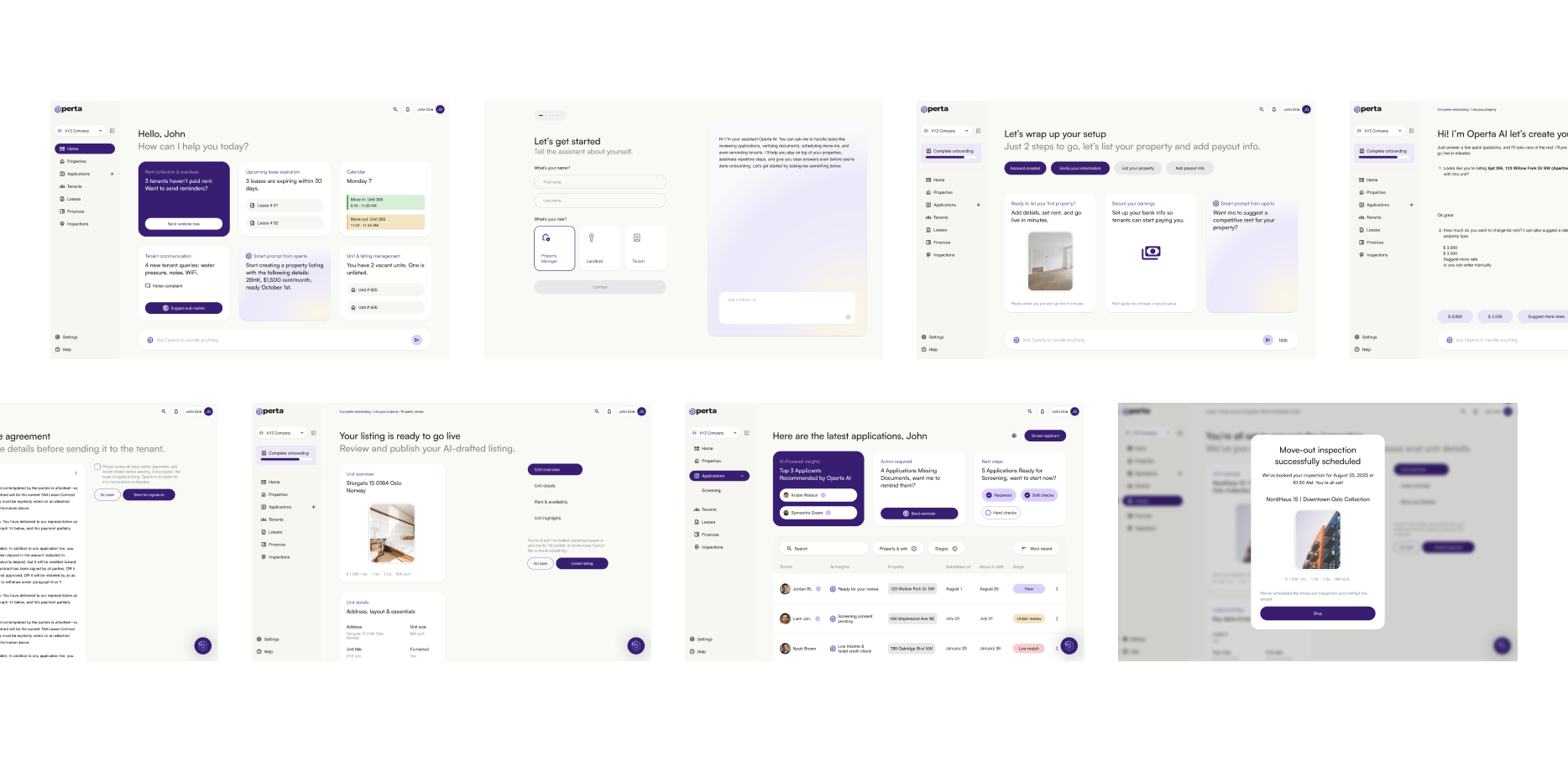
Process and approach
Applied a human-centred framework, Discover, Define, Ideate, Prototype, grounded in competitive benchmarking against TenantCloud, Innago, and Bidrento. Research revealed a consistent gap: existing platforms were feature-rich but cognitively heavy, requiring users to navigate complexity rather than be guided through it. This informed the core design principle for Operta, surface the right action at the right moment, reduce manual decision-making, and let the AI carry the operational load. Wireframes were tested iteratively with stakeholders before progressing to high-fidelity UI.
Outcome and impact
The AI-powered experience redefined how property managers interact with Operta, fewer manual steps, smarter suggestions, and a platform that stakeholders described as feeling human, intuitive, and built for modern landlords.
Simplified setup flow cut drop-off before users went live, guiding landlords to first value faster
Properties, tenants, leases, billing, and inspections unified into one intelligent workspace
Agentic AI co-pilot embedded throughout, proactive, conversational, and context-aware
- Client
- Operta
- Project Type
- Product Design / Agentic AI UX
- Timeline
- 2024 – 2025
- Overview
- Designed the full UX and UI for Operta's AI-powered property management platform, from IA and wireframes through to high-fidelity dashboards and an intelligent agentic experience that replaces reactive tools with proactive automation.